


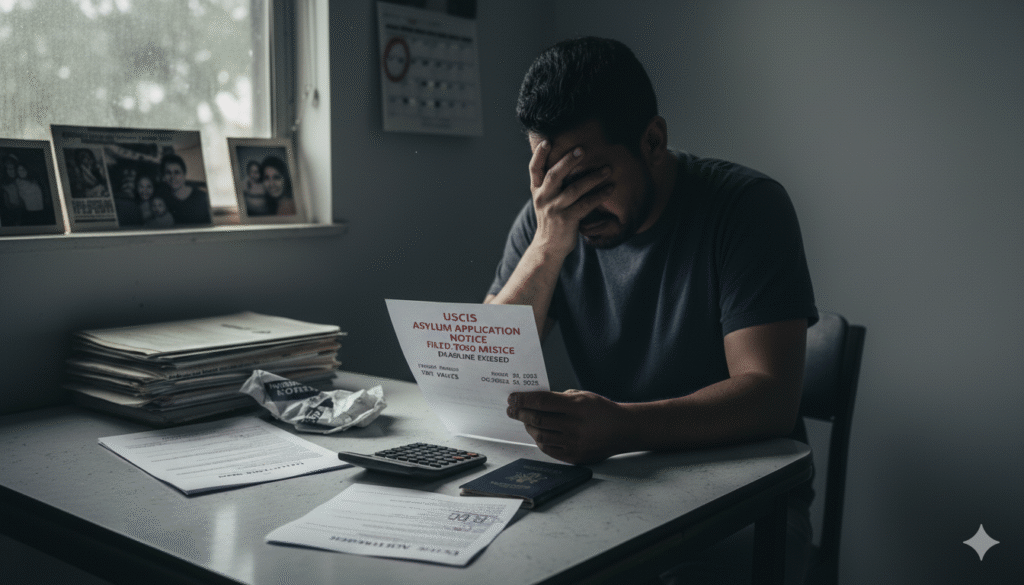
The Most Common Reason Strong Asylum Cases Fail
Many people have legitimate fears of returning to their home country.
They have:
- Been threatened
- Been attacked
- Been targeted
- Or have a well-founded fear of persecution
But their asylum cases are denied for one simple reason:
They filed too late.
Under U.S. immigration law, asylum applicants must file within one year of their last arrival in the United States.
This rule is strict. And it surprises many people.
If you are considering asylum — or already past one year — this article is critical.
What Is the One-Year Asylum Rule?
The Immigration and Nationality Act requires that:
An asylum application must be filed within one year of the applicant’s last arrival in the United States.
The clock starts from:
- The date you most recently entered the U.S.
- Not from when threats began
- Not from when you “decided” to apply
- Not from when conditions worsened (unless exceptions apply)
If you entered on:
- A visa
- Without inspection
- A temporary status
The one-year clock still applies.
What Happens If You Miss the One-Year Deadline?
If you file after one year, the asylum officer or immigration judge may:
- Deny your asylum application as untimely
- Refuse to consider the merits of your persecution claim
Even if your fear is real.
However — and this is important — missing the deadline does not automatically end all protection options.
You may still qualify for:
- Withholding of removal
- Protection under the Convention Against Torture (CAT)
But those forms of relief:
- Have higher standards
- Provide fewer benefits
- Do not lead to permanent residence as easily as asylum
That’s why timing matters so much.
Are There Exceptions to the One-Year Rule?
Yes — but they are narrow and heavily scrutinized.
There are two main categories of exceptions:
1️⃣ Changed Circumstances
You may qualify for an exception if:
- Conditions in your home country significantly changed after your arrival
- A new law or policy targets people like you
- You converted religions after arriving
- You became politically active in the U.S.
- Your personal situation changed in a way that creates new risk
The key requirement:
You must file within a “reasonable period” after the change.
Waiting too long after the change can still result in denial.
2️⃣ Extraordinary Circumstances
These apply when something prevented you from filing on time, such as:
- Serious illness
- Mental health conditions
- Legal disability
- Ineffective assistance of counsel (with strict proof requirements)
- Maintaining valid status for most of the first year
Again, you must file within a reasonable time once the obstacle ends.
What Does “Reasonable Period” Mean?
There is no exact number of days written in the statute.
However, courts generally look at:
- How quickly you filed after the change
- Whether delays were justified
- Whether you acted in good faith
Months of unexplained delay can be fatal to an exception claim.
This is where legal strategy matters.
Common Myths About the One-Year Deadline
“I didn’t know about the rule.”
Lack of knowledge is not considered an exception.
“My friend applied after two years and was fine.”
Every case is different. Exceptions depend on specific facts and documentation.
“I’ll wait until things get worse back home.”
Waiting can permanently bar eligibility.
“I still have time — I’ll file later.”
Many people miscalculate their entry date and miss the deadline unintentionally.
What If You Entered, Left, and Re-Entered?
The one-year clock typically resets from your most recent lawful or unlawful entry.
However, travel history can complicate timing calculations.
If you:
- Traveled back and forth
- Entered on advance parole
- Had multiple entries
Your timeline should be reviewed carefully.
Real-World Example (Anonymized)
The Situation:
An individual entered the U.S. and waited two years before filing for asylum. During that time, political conditions worsened in their home country.
The Strategy:
The case focused on documenting the changed country conditions and demonstrating that the applicant filed within a reasonable time after those changes occurred.
The Result:
The court accepted the changed circumstances exception and allowed the asylum case to proceed.
Without a properly argued exception, the case would have ended immediately.
Why the One-Year Deadline Requires Immediate Evaluation
If you are approaching the one-year mark:
- Do not wait.
- Do not assume you have “plenty of time.”
- Do not rely on general advice.
If you are already past one year:
- Do not panic.
- Do not assume you are automatically disqualified.
- Do not file without reviewing possible exceptions.
A late filing handled incorrectly can permanently damage your case.
Frequently Asked Questions About the One-Year Rule
Does the deadline apply if I entered without a visa?
Yes.
Does it apply if I had lawful status?
Yes — unless you qualify under an extraordinary circumstances exception.
Can I still apply after one year?
Possibly, if you qualify for a changed or extraordinary circumstances exception.
What if I was a minor when I entered?
Special considerations may apply, but the rule still matters.
Is it better to file quickly even if I’m not fully prepared?
Filing prematurely can create credibility problems. Strategy matters.
Final Thoughts: Timing Is as Important as Your Story
Asylum is about proving persecution.
But before a judge even hears your story, the one-year rule may determine whether your case is considered at all.
The strongest cases combine:
- Timely filing
- Proper documentation
- Clear legal theory
If you are within one year of arrival — or already past it — the smartest move is a confidential legal evaluation.
Waiting is the one risk you cannot undo.