


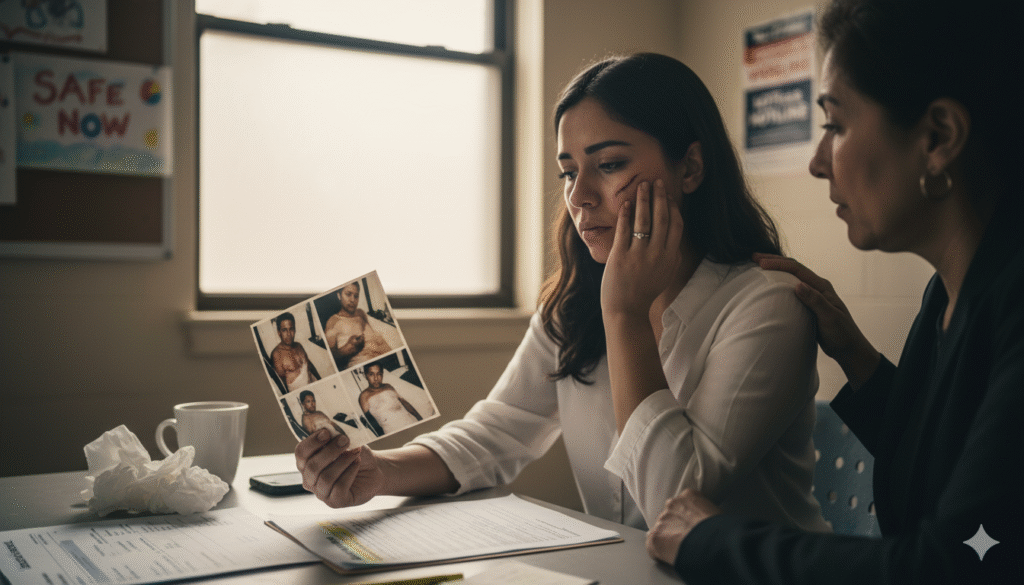
Domestic Violence and Asylum: A Legally Complex Area
Many people fleeing abusive relationships ask:
“Can I apply for asylum because of domestic violence?”
The honest answer is:
Sometimes — but it depends on how the law applies to your specific situation.
Gender-based asylum cases have evolved significantly over the past decade. Court decisions and government policies have shifted, narrowed, and expanded standards multiple times.
This is not a simple category.
But when properly structured, some domestic violence and gender-based harm cases can qualify under U.S. asylum law.
The Legal Foundation: The Five Protected Grounds
Asylum requires persecution based on one of five protected grounds:
- Race
- Religion
- Nationality
- Political opinion
- Membership in a particular social group
Domestic violence cases typically fall under:
Membership in a Particular Social Group (PSG)
This is where legal precision becomes critical.
What Is a “Particular Social Group”?
A particular social group must be:
- Clearly defined
- Socially distinct in the country
- Recognized as a group in society
- Not overly broad
In domestic violence cases, examples may include:
- “Women unable to leave abusive relationships in [Country]”
- “Women in [Country] viewed as property of their husbands”
- “Women who reject forced marriage”
The group must be legally defined and supported by country condition evidence.
Not every abusive situation automatically qualifies.
Why Domestic Violence Alone Is Not Enough
Asylum does not apply simply because abuse occurred.
The applicant must prove:
1️⃣ The harm rises to the level of persecution
2️⃣ The harm is connected to membership in a protected group
3️⃣ The government is unwilling or unable to protect them
For example:
- If police repeatedly refused to intervene
- If restraining orders were ignored
- If the legal system systematically fails women
- If cultural norms prevent escape
These factors strengthen a claim.
The Importance of Government Inability or Unwillingness to Protect
This is one of the most important elements.
You must show that:
- You sought protection and were denied, OR
- Seeking protection would have been dangerous or futile
Evidence can include:
- Police reports
- Hospital records
- Witness affidavits
- Documentation of failed protective measures
- Human rights reports about systemic gender-based violence
Without proof of government failure, the case may be denied.
What About Forced Marriage or Honor-Based Violence?
Gender-based asylum can also include:
- Forced marriage
- Female genital mutilation (FGM)
- Honor killings
- Severe cultural or religious gender-based harm
These cases often require strong documentation and country condition evidence.
How Recent Legal Changes Affect These Cases
Gender-based asylum law has shifted under different administrations.
Some key developments:
- Courts have recognized certain domestic violence claims.
- Later rulings narrowed standards.
- Subsequent decisions have reopened possibilities.
Because the legal landscape changes, these cases must be carefully evaluated under current precedent.
Outdated advice can seriously damage a claim.
Common Mistakes in Gender-Based Asylum Cases
Defining the Social Group Too Broadly
Courts reject vague group definitions.
Failing to Show Government Failure
Private harm alone is not enough.
Lack of Country Condition Evidence
The case must show systemic issues, not isolated abuse.
Filing After One Year Without an Exception
The one-year deadline still applies.
Minimizing the Abuse
Detailed, consistent testimony matters.
Real-World Example (Anonymized)
The Situation:
A woman fled severe domestic abuse in her home country. Police repeatedly refused to intervene, citing “family matters.”
The Strategy:
The asylum claim was structured around:
- Membership in a defined social group
- Detailed personal declaration
- Police inaction evidence
- Country reports documenting systemic violence against women
The Result:
The court accepted that the government was unwilling to protect her and that the harm met the persecution standard.
Without precise legal framing, the same facts could have been denied.
Can Men Qualify for Gender-Based Asylum?
Yes.
Although many gender-based cases involve women, men may qualify if:
- They face persecution tied to gender norms
- They are targeted for sexual orientation
- They face forced recruitment or honor-based violence
- They are punished for rejecting cultural gender roles
Each case depends on facts and legal structure.
Frequently Asked Questions
Is domestic violence automatically grounds for asylum?
No. It must meet the legal standards for persecution and protected grounds.
Do I need police reports?
They help — but credible testimony and country reports can also support your claim.
What if I never reported the abuse?
You may still qualify if reporting would have been dangerous or futile.
Does asylum protect my children?
In many cases, eligible family members may be included.
Is it better to apply immediately?
Timing matters — especially regarding the one-year rule.
Why These Cases Require Strategic Preparation
Gender-based asylum cases are:
- Fact-intensive
- Legally technical
- Often emotionally difficult
- Closely scrutinized by adjudicators
The strongest cases combine:
- Clear social group definition
- Detailed documentation
- Credible testimony
- Strong country evidence
These are not DIY cases.
Final Thoughts: Protection Is Possible — But Legal Framing Is Critical
Domestic violence and gender-based harm are real and devastating.
But in asylum law, the question is not only:
“Were you abused?”
It is:
“Does the abuse legally qualify as persecution based on a protected ground, and did the government fail to protect you?”
That distinction determines the outcome.
If you believe you may qualify, the next step is not filing immediately.
It is evaluation.
Precision protects credibility.